Selva Verde SustainabilitySarapiqui, Costa Rica
WHAT IS THE CERTIFICATION?Certification programs in travel and tourism are important tools for distinguishing the genuinely responsible companies, products or services that are using "ecological" or "sustainable" as a marketing strategy to attract customers.
WHAT IS CST?
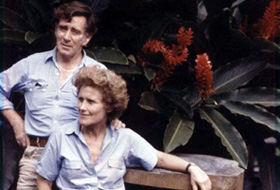
Our CommitmentSelva Verde Lodge strongly supports the CST program because it believes that in the long term properly implemented certification is one of the most promising ways to provide a real incentive to the tourism industry to practice sustainability. By building brand awareness around certification, consumers have an easy and identifiable way to determine which organizations are taking steps to ensure sustainability for their local environment and community. Selva Verde began with one woman's dream to preserve nearly 500 acres of endangered tropical rainforest and the multitude of floral and faunal species that flourish within it. Conservation of the rainforest and its inhabitants remains paramount in the mission of Selva Verde. Working with organizations such as the Sarapiqui Conservation Learning Center (founded by the Holbrook family in 1993), the Costa Rica Bird Route, the San Juan-La Selva Biological Corridor, Rainforest Biodiversity Group and others, Selva Verde has retained its focus on ecological conservation and education. Additionally we are committed to responsible tourism; finding ways to minimize negative impacts on the local environment and maximize positive effects on the surrounding community in Sarapiquí.
MissionWe are an ecotourism destination devoted to the protection and conservation of the environment, offering all visitors a unique rainforest experience through interpretation, adventure and interaction with our community.
VisionTo remain a primary ecotourism destination and provide an example of conservation that devotes all its efforts to protecting biodiversity while teaching and sharing our cultural knowledge with our visitors and the community, offering a unique natural experience in harmony with nature.
Law № 7317 Conservation of Wildlife LawSelva Verde complies with the mandates of Law 7317 which include: Restrictions for the use of the rainforest: Flash cameras must be used with discretion and respect for nature, in accordance with the recommendations of the naturalist guides It is forbidden to enter the reserve with food Removal of wildlife species or seeds from the forest is prohibited Smoking in the forest or lodge is prohibited; there is a designated smoking area in the bar Littering is forbidden. It is forbidden to leave trash or foreign objects, whether organic or inorganic, solid or liquid in the forest, or to deposit substances or compounds that alter the physical or chemical characteristics of soil Feeding, handling or harassing wildlife is prohibited For your safety stay on the trails when walking in reserve Closed shoes or rubber boots are required for walking the trails of the reserve Ask a guide for assistance if needed
Law № 7476 Law Against Sexual Harassment in Employment and TeachingSelva Verde abides by Law No 7476 which is the law barring sexual harassment in the workplace, and the code of conduct for the Protection of Children and Adolescents from Sexual Commercial Exploitation associated with Travel and Toursim in Costa Rica. No offenses of this law will be tolerated. Any activity encouraging or promoting sex tourism is forbidden.
Sustainability Policies:In 1993 the Bertha Carter and the Holbrook family started a public library at Selva Verde Lodge. With time, the library expanded to become a resource of educational opportunities for the surrounding communities. Today, that library has grown to become the Sarapiqui Conservation Learning Center (SCLC) or Centro para la Enseñanza y Conservacíon de Sarapiquí (CECOS). The SCLC focuses its efforts in four areas — environmental education, community development, conservation, and tourism — in order to help form future environmental leaders, raise the organizational capacity of local communities, promote sustainable land use, and connect tourists to the local community. The programs serve hundreds of local people and thousands of eco tourists each year. Selva Verde is proud to support the SCLC and the Sarapiqui communities, and we encourage our guests to participate in activities offered through the center, which can be found here on our website, or on the SCLC website. We also promote activities offered by other local providers, supporting the local economy. Energy saving practices include: high efficiency fluorescent light bulbs, solar heated hot water, recycling program, composting of organic waste, water stations for refilling water bottles, soap and shampoo dispensers in bathrooms, biodegradable cleaning agents used, non-disposable tableware, organic landscape maintenance…and more. Our staff is comprised almost entirely of local employees, who are instructed in eco-conscious policies and methods. Special rates are offered to Costa Rican Nationals to support local tourism and environmental education.
More Sustainabilty Priorities:It is completely prohibited for visitors to feed any of the animals, including direct or indirect feeding of any species. It is prohibited to introduce exotic species of flora or fauna into the Reserve. No animals will be hunted, held in captivity, or exploited in any way in the reserve or on the grounds of Selva Verde Lodge No plants will be indiscriminately cut, harvested or used inappropriately. There will be no contamination of water or natural environment. Many products for sale at the Selva Verde Lodge are made by local artisans to help them. The souvenir shop at Selva Verde Lodge supports local artisans by selling their products, does not sell products that are harmful to the environment. Selva Verde Lodge uses recycled paper and paper products, to prevent unnecessary felling of trees. SVL purchases products in reusable containers when possible. Smoking is prohibited in the rainforest and public areas other than those indicated. Smoking is not allowed inside the rooms. Selva Verde Lodge has contracts with private doctors. In case of an accident, is prohibited to administer medicine to visitors of the Reserve. The doctor should be contacted and he will assist the tourist in the hotel or in his office.
The personnel at Selva Verde Lodge are informed about all the programs carried out at the organization that are meant to save water and energy and about the sustainable use of resources, which they can also implement at their homes. All policies and commitments are published and available for use by staff and guests
GOOD PRACTICES:At Selva Verde Lodge, conservation and preservation of our natural resources requires minimizing the impact of our and our visitors impact on the environment. Some of the good practices we have implemented are: A compost system to recycle organic waste, mainly from our restaurant. Solar panels to heat the water and provide energy in the rooms. Recycling of solid materials such as; glass, paper, cartons, aluminium and other products. The use of sunlight to dry laundry. The usage of biodegradable cleaning products with no environmental damage or minimum impact. Refillable soap dispensers in the bathrooms to avoid waste. We do not use chemicals, pesticides, herbicides or fungicides. To maintain our gardens, instead of this we use a natural fertilizer and derived from compost. We created our Green Classroom program in which children of schools and high schools have the opportunity to share and learn experience about sustainability, conservation and importance of preserving natural resources of the region.
Selva Verde partakes in the ¨Blue Flag¨ program which motivates to take actions to decrease global warming and environmental damage caused by the human activity.
Selva Verde Lodge encourages people to help keep the forests alive!
Selva Verde Lodge advises people to make sustainable purchases following these suggestions:
Selva Verde Lodge encourages visitors to donate an economic or material donation to help support conservation enviromental and educational programs developed by the Sarapiquí Conservation Learning Center. Reforestation at the SCLC
History of Sarapiquí:Sarapiquí is the tenth Canton of the province of Heredia and it is by far the largest, comprising almost three quarters of the entire province. Located in the northern lowland region of Costa Rica, Sarapiquí was granted the title of canton during the second term of the presidency of José María Figueres Ferrer in 1970. Sarapiquí has a population of 55,000 inhabitants according to a recent official report, and has five districts: Puerto Viejo, La Virgen, Horquetas, Llanuras del Gaspar and Cureña.
The history of this area goes back to the pre-Columbian time, during which time the region was populated by indigenous inhabitants known as Votos, who inhabited the regional plains. The Spanish name Sarapiquí was derived Yory, the name given to the river by the Votos, according to Carlos Gagini a well know Costa Rican writer and historian. This canton had an important contribution to the history of the country in two different ways: 1) It was a vital part of the first transport route within Costa Rica from Europe.
To reach Sarapiquí, there are three possible driving routes:
What does Sarapiquí offer?
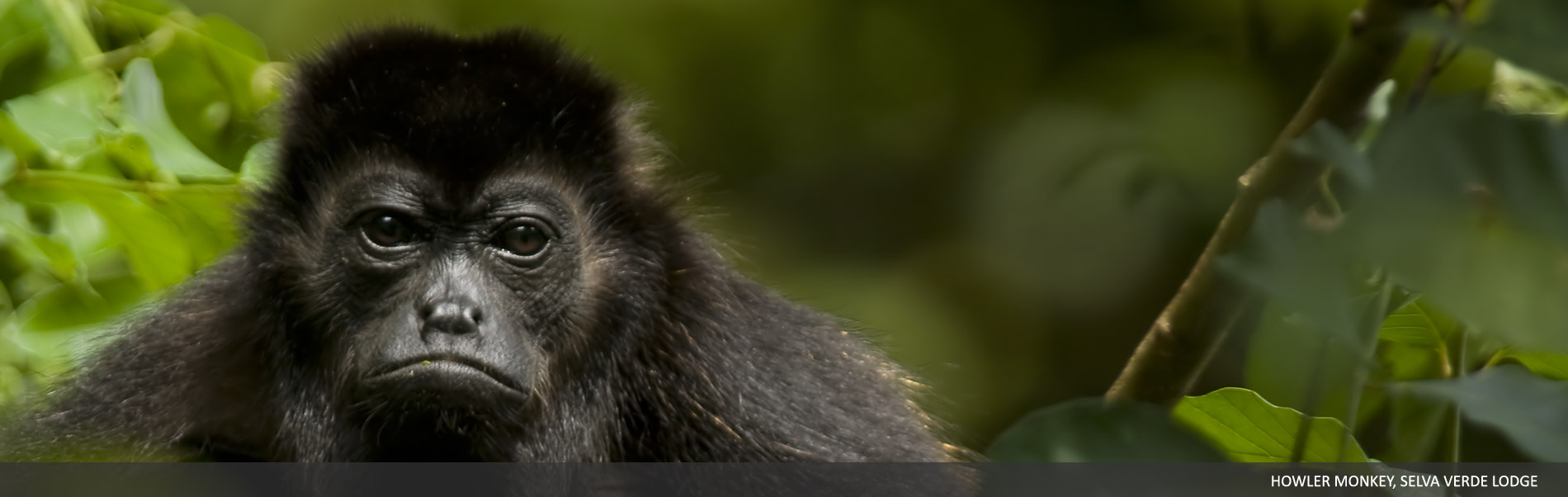
Natural history tours include trail walking and boat tours which offer opportunities to observe rainforest flora, birds, monkeys, iguanas, caimans, crocodiles, sloths, river otters, amphibians, and insects. In addition, there are Frog and Butterfly Gardens (with 500 of the 700 butterflies of Costa Rica), botanical gardens, and a Serpentarium. Area reserves protect the wildlife and forests. Sarapiquí offers varied landscapes of tremendous biodiversity; with 3000 species of plants, 450 species of ants, and 142 species of mammals, among many others.
Nature and adventure tourism
Ecotourism and adventure activities are very important for the region, supporting more than 20 hotels, cabins and lodges of high quality offering visitors more than 600 rooms at excellent rates, while providing the local population many stable and well paid jobs. Tourism activities include: birding, hiking, rafting and river tours, agricultural, natural history and cultural activities, and horseback riding. Due to Sarapiquí's geographic location, day trips can be arranged to popular attractions such us Poas Volcano National Park, Arenal Volcano National Park, Braulio Carrillo National Park, Tortuguero National Park and Barra del Colorado Wildlife refuge, and the area is easily accessed from the capital, San Jose. The Sarapiquí Tourist Board was formed in 1996 and serves its main objectives: promoting the tourism attractions of the region, while protecting the landscape and scenic value of the area, preserving the Sarapiquí wildlife, and respecting the communities who live here. To access the web page of the Sarapiquí Chamber of Tourism, go to:www.sarapiquicostarica.com
COSTA RICAN NATIONAL PARKS.
Law № 7476LAW AGAINST SEXUAL HARASSMENT IN EMPLOYMENT AND TEACHING
CHAPTER I BASISArticle 1 .- Principles Regents
CHAPTER II PURPOSE AND DEFINITIONSArticle 2 .- Objective The purpose of this Act is to prohibit and punish sexual harassment and discriminatory practices based on sex, the dignity of women and men in labour relations and teaching. Article 3 .- Definitions Is defined as sexual harassment all kind of sexual behaviour against a person women or men in a continuous way causing adverse effects in the following cases:
Law № 7317
Art 1st. This law is intended to establish regulations for wildlife made up of the continental and insular natural flora and fauna that lives temporally or permanently in the country. Art 2nd. It declares of public domain wildlife as a renewable natural resource, which is part of the natural heritage. Likewise, it is stated of public interest the flora, conservation, investigation and development of genetic resources, species, breeds, wildlife and botanical zoological varieties, and all wildlife species that have had genetic adaptations to the diverse ecosystems.
Code of Conduct for the Protection of Children
|
![]() |
![]() |
![]() |
Done by: Cristian Rojas Alvarado, Selva Verde Lodge


Last month Caitlin Marquis, a short term volunteer who came to work with the SCLC for four weeks this Spring, composed a four-page informational packet on the SCLC's reforestation activities. Here is a taste of what can be found in the downloads section of our website


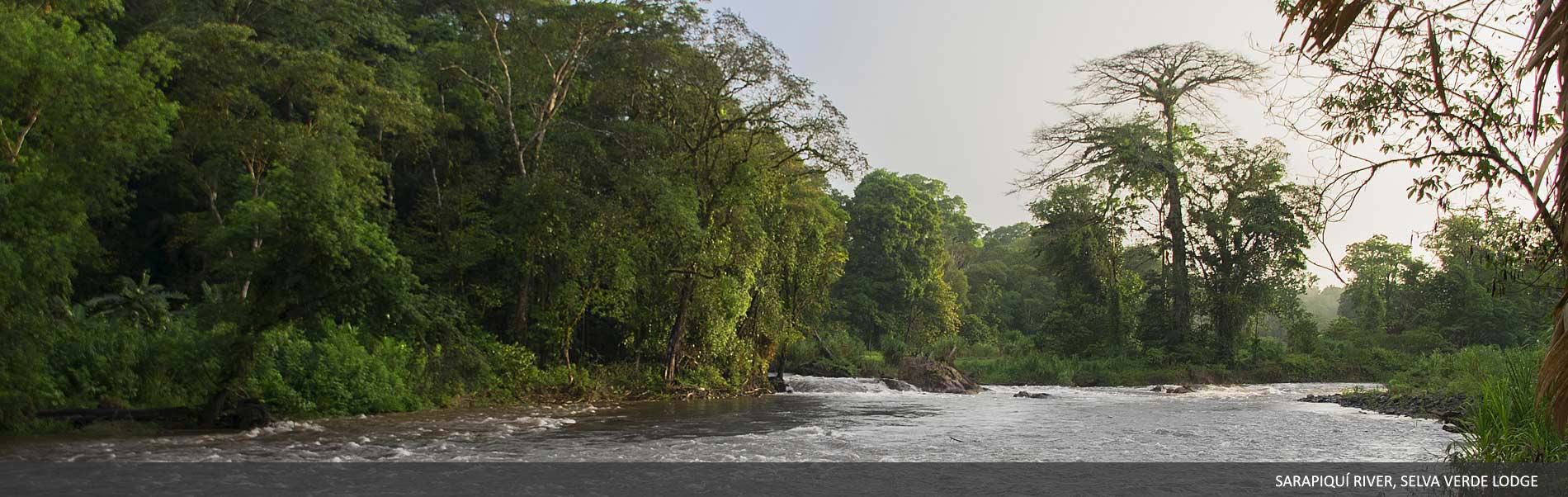
Sarapiquí 's humid climate is characteristic of the Caribbean region of Costa Rica. It is largely agricultural with a network of important waterways such as El Angel waterfall, La Paz Waterfall, El Congo lagoon, and of course, the Sarapiquí River.
1) The traditional route known as "Heroes" (Vara Blanca), with spectacular views of San Fernando and La Paz waterfalls, beautiful mountains, rivers and volcanoes. (This route is currently under repair and is only accessible with 4x4 vehicles).
Sarapiquí offers 6 of the 8 tourism categories established by the Costa Rican Tourist Board: traditional tours, natural history tours, adventure activities, sport fishing, elder tours, and bird watching tours (boasting 425 species of the 850 species of Costa Rica).
The beautiful Sarapiquí River can be explored and enjoyed in several ways. White water rafting (beginner to expert class rapids), canoeing, kayaking, and motorized boat tours are all available to visitors. The river runs parallel to the road and has 16 emergency exits, allowing for safe practice of all the water sports. In addition to the beauty of the water and rapids, the river courses past primary and secondary forests teeming with wildlife, creating tremendous scenic value and an internationally attractive tourism commodity.